| Opening Note
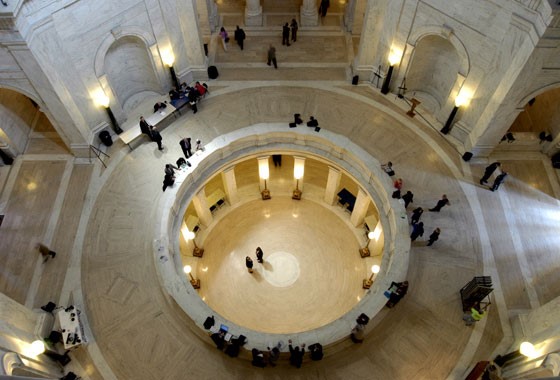
The Well is where conversations happen at the Capitol — where legislators, lobbyists, and staff compare notes, test the mood, and figure out what matters. This briefing is built the same way: a fast, disciplined read on what is moving in West Virginia government before the day begins.
Rotunda Roundup
The Legislature owns the governing agenda this morning. September interims opened Sunday with lawmakers drilling into flood recovery, water infrastructure, fintech and health policy, and the schedule only broadens Monday and Tuesday into alcohol regulation, child welfare, manufacturing, insurance, the state budget, rural health and coal-fired generation. With little major executive-branch action breaking during the weekend window, the committee rooms are where the clearest signals are emerging about issues likely to carry into the 2027 session.
What Matters Today
Water infrastructure and flood recovery opened the September interims with two of the state’s most persistent governing problems on the table.
The Joint Standing Committee on Technology and Infrastructure spent Sunday’s opening block on water and wastewater infrastructure funding, with the Water Development Authority and Department of Environmental Protection among the presenters. At the same time, the Joint Legislative Committee on Flooding had state Emergency Management Director Matthew Blackwood scheduled to address disaster case-management services and the status of recovery from recent floods.
Why it Matters: Aging utility systems and repeated flood disasters continue to create overlapping demands on state funding, agency capacity and local governments.
What to Watch: Look for lawmakers to turn the discussions into specific funding, oversight or implementation proposals before the regular session.
Source: West Virginia Legislature — September Interim Schedule and Agendas
West Virginia’s summer of repeated flooding has shifted from emergency response to a complicated, months-long recovery effort.
Communities across West Virginia are still rebuilding after repeated rounds of destructive flooding this summer, including the June flooding in Boone and Logan counties, the July disaster that hit Lewis, Upshur and surrounding counties, and additional August storms that prompted a statewide emergency declaration. Recovery needs now include debris removal, damaged roads and bridges, housing, business reopening and assistance for families navigating FEMA and other programs. In Lewis County alone, more than 130 businesses initially closed after the July flooding, with dozens of homes requiring demolition and hundreds of residents completing FEMA damage assessments.
Why it Matters: The succession of disasters is creating a sustained state-government challenge involving emergency management, infrastructure spending, federal reimbursement and long-term community recovery rather than a series of isolated weather events.
What to Watch: Legislative scrutiny of the state’s flood-recovery system, additional FEMA decisions and whether lawmakers provide new resources for mitigation and resiliency as the 2027 session approaches.
Source: WV MetroNews
Fintech and digital currency received a dedicated legislative hearing as lawmakers continue exploring fast-moving financial technology.
The Joint Standing Committee on Economic Development scheduled fintech founder and investor Sarah Biller for a Sunday evening presentation on financial technology and digital currency. The agenda did not identify a specific bill or regulatory proposal, making the hearing primarily an information-gathering step — but one that puts taxation, regulation and the state’s posture toward emerging financial products squarely in the legislative conversation.
Why it Matters: Digital finance can quickly implicate tax policy, consumer rules, economic-development strategy and other regulated products, including the broader market for event-based financial trading.
What to Watch: Whether lawmakers move from general education to specific tax, licensing, consumer-protection or economic-development proposals.
Source: West Virginia Legislature — Joint Standing Committee on Economic Development
West Virginia contractors are preparing for what their trade association describes as a potential construction “golden age” driven by data centers, energy and major industrial projects.
Contractors Association of West Virginia CEO Jason Pizatella said the state could see four to five years of unusually strong construction demand as data centers, power generation, nuclear development and manufacturing projects advance. He pointed to the Nscale project near Point Pleasant, where roughly 700 to 800 construction workers are already on site and employment could surpass 1,000, along with another proposed Mason County data center that could generate roughly 1,000 additional construction jobs. The association is emphasizing worker recruitment and retention and coordinating with developers and community colleges to prepare the workforce these projects will require.
Why it Matters: If even a portion of the announced projects materialize, the effects could extend beyond construction into workforce policy, community colleges, infrastructure, local tax bases and competition for skilled labor.
What to Watch: Whether West Virginia can supply enough trained workers locally — and how quickly announced data-center, nuclear, transmission and manufacturing projects actually move from commitments to construction.
Source: WV MetroNews
CNX Gas is adding to its investment in Monongalia County while directing additional support to local volunteer fire departments.
CNX announced another Monongalia County investment alongside assistance for volunteer fire departments serving communities around its operations. The announcement comes as CNX maintains a significant natural-gas position in the county: current public well data show 80 CNX well records, including 20 permits over the past two years and 11 drilled-but-uncompleted wells. CNX has also made support for volunteer fire and emergency-response organizations a standing part of its community-engagement program.
Why it Matters: Continued CNX investment reinforces Monongalia County’s role in West Virginia’s natural-gas economy while highlighting the relationship between energy development, local public-safety services and community investment.
What to Watch: Additional drilling and infrastructure activity in the county and whether CNX’s local investments expand alongside development of its permitted acreage.
Source: WV MetroNews
Wheeling and Silicon Foundry have negotiated a binding 90-megawatt ceiling for the Warwood data center — creating a potential local template for navigating West Virginia’s new data-center law.
The city and Silicon Foundry Energy LLC have agreed to a memorandum of understanding that would prevent the Warwood project from becoming a state-defined “high-impact” data center, which begins at an aggregate critical information-technology load of 90 megawatts. Keeping the project below that threshold would preserve local governmental authority and allow Wheeling to use tax increment financing in the area; City Council is expected to consider the agreement Tuesday.
Why it Matters: The agreement offers municipalities a concrete strategy for retaining local leverage over projects that remain below the threshold established under HB 2014.
What to Watch: Tuesday’s council action — and whether other communities facing data-center proposals begin considering similar contractual limits.
Source: The Intelligencer
West Virginia’s data-center push is drawing another layer of scrutiny over pollution, transparency and who absorbs the costs of AI-driven power demand.
A Charleston Gazette-Mail report published Saturday examined new research on the health effects associated with the additional power generation needed to serve data centers. One report cited a 2024 academic study that placed six West Virginia counties among the nation’s 10 highest for estimated household health costs associated with data-center electricity demand, while noting that part of the impact reflected West Virginia coal plants serving data centers in neighboring Virginia. The report also highlighted continuing questions over HB 2014’s confidentiality provisions and the Morrisey administration’s still-developing plans for statewide data-center standards.
Why it Matters: Environmental, ratepayer and transparency concerns are becoming a parallel policy track to the administration’s economic-development case for rapid data-center investment.
What to Watch: Whether Commerce, DEP, the PSC or lawmakers provide more detail on statewide siting, noise, setback, power-generation or disclosure standards.
Source: Charleston Gazette-Mail via West Virginia Press Association
Senate Health Chairman Brian Helton says he will make another push in 2027 to restore the death penalty for certain sexual crimes against young children.
Helton, R-Fayette, plans to reintroduce legislation allowing capital punishment or life without parole for someone convicted of sexually assaulting a child younger than 12 or injuring a child’s sexual organs while attempting such an assault. His Senate Bill 783 received no committee action after being introduced in February. West Virginia abolished capital punishment in 1965, and Helton’s proposal directly challenges the U.S. Supreme Court’s 2008 Kennedy v. Louisiana decision, which held that the death penalty is unconstitutional for child rape when the victim does not die and death was not intended.
Why it Matters: A renewed push by a Senate committee chairman would put a major criminal-justice and constitutional fight before the Legislature, with any enacted law almost certain to face immediate federal constitutional scrutiny under existing Supreme Court precedent.
What to Watch: Whether Senate leadership gives Helton’s proposal a hearing in 2027 and whether supporters explicitly design the measure as a vehicle to ask the U.S. Supreme Court to reconsider Kennedy.
Source: West Virginia Watch
The Brooke High locker-room camera case has expanded from criminal charges and a possible legislative fix into nine civil lawsuits.
Nine lawsuits have now been filed in Brooke County Circuit Court on behalf of female student-athletes who used the girls locker rooms at Brooke High School, including Brooke students and visiting athletes. The complaints seek monetary damages, while former principal Eric James continues to face two felony charges stemming from the discovery of cameras in the locker-room areas.
Why it Matters: The civil litigation significantly expands the potential institutional and financial exposure surrounding a case that has already prompted discussion at the Capitol about gaps in West Virginia’s laws governing secret recordings.
What to Watch: The school system’s legal response, the scope of discovery and whether lawmakers move forward with legislation strengthening criminal penalties for covert recording in changing areas.
Source: The Intelligencer
West Virginia’s new online age-verification law addresses sexually explicit material, but broader questions about social-media design and child safety remain unresolved.
A West Virginia Watch commentary examines implementation of HB 4412, which took effect June 12 and requires certain websites and applications to verify users are at least 18 when material harmful to minors constitutes more than one-third of their content. The law does not regulate social-media functions such as infinite scrolling, personalized recommendations or notifications. The piece argues that policymakers now face a second question: whether the state should measure compliance and effectiveness before considering broader protections governing how online platforms interact with minors.
The issue also intersects with Attorney General JB McCuskey’s participation in a multistate settlement with Meta requiring additional protections for children on Facebook and Instagram.
Why it Matters: Online child protection is moving from passage of an age-verification law into an implementation and enforcement question — while potentially opening a broader legislative debate over privacy, parental controls and social-media platform design.
What to Watch: Enforcement of HB 4412, evidence about whether covered websites are complying and whether lawmakers return in 2027 with broader legislation addressing social-media platforms and minors.
Source: West Virginia Watch
Government Organization puts Homeland Security, alcohol regulation and Home Rule together in one consequential Monday morning hearing.
The Joint Standing Committee on Government Organization is scheduled to hear from Department of Homeland Security Secretary Michael Baylous, review a performance report involving the Massage Therapy Licensure Board, receive an Alcohol Beverage Control Administration update on HB 5437 and hear from Revenue Secretary Eric Nelson and the West Virginia Municipal League on the Home Rule Board. ABCA licensing and enforcement officials are both listed for the alcohol-law update.
Why it Matters: The hearing reaches across public safety, professional regulation, alcohol enforcement and the state-local balance of authority — each an area capable of producing 2027 legislation.
What to Watch: The specific implementation issues ABCA identifies under HB 5437 and whether lawmakers raise broader licensing, enforcement or Home Rule changes.
Source: West Virginia Legislature — Government Organization Agenda
Lawmakers will examine whether West Virginia can turn reshoring into a larger manufacturing strategy.
The Joint Standing Committee on Education meets Monday morning for a presentation on “ReshoreWV,” bringing together the West Virginia Manufacturers Association, Higher Education Policy Commission, WVU, Marshall University, the Marshall Advanced Manufacturing Center, the University of Charleston and private-sector representatives. The panel also will review the Underwood Smith Teaching Scholarship.
Why it Matters: A serious reshoring push would link workforce preparation, higher education and economic-development policy directly to the state’s manufacturing recruitment strategy.
What to Watch: Whether the discussion produces concrete workforce, tax, site-development or training proposals for the 2027 legislative session.
Source: West Virginia Legislature — Joint Standing Committee on Education Agenda
Child welfare safeguards return to the Capitol with the Bureau of Social Services at the table.
The Joint Committee on Children and Families will devote its Monday meeting to “Child Welfare System Safeguards.” Scheduled presenters include Bureau of Social Services Deputy Commissioner Kendra Boley-Rogers, Kanawha County Schools Lead Social Worker and Attendance Director Kim Legg and Kevin Boden of the Home School Legal Defense Association.
Why it Matters: The mix of child-welfare, education and home-school perspectives suggests lawmakers are examining where state protective authority, school reporting and family rights intersect.
What to Watch: Any identified statutory gaps, reporting changes or oversight proposals that could become child-welfare legislation next year.
Source: West Virginia Legislature — Joint Committee on Children and Families Agenda
Insurance coverage for living organ donors gets a focused review Monday morning.
The Joint Standing Committee on Insurance and PEIA will hear from the American Kidney Fund on health insurance for living organ donors. No legislation is listed on the agenda, but the hearing puts donor-related insurance protections and potential coverage barriers directly before lawmakers.
Why it Matters: Changes affecting living donors could reach commercial insurance policy, PEIA and the state’s broader organ-transplant policy environment.
What to Watch: Whether lawmakers identify insurance practices they want to prohibit or standardize through legislation.
Source: West Virginia Legislature — Insurance and PEIA Agenda
Tuesday’s Finance Committee will put the FY 2026 books and rural-health implementation under direct legislative review.
Revenue Secretary Eric Nelson, Deputy Secretary Peter Shirley and State Budget Office Director Aaron Snodgrass are scheduled to brief the Joint Standing Committee on Finance on fiscal year 2026 budget matters. Health Secretary Dr. Arvin Singh then is scheduled to provide an update on the Rural Health Transformation Program.
Why it Matters: Revenue and spending performance will shape how much fiscal room lawmakers believe they have going into 2027, while rural-health implementation carries major consequences for hospitals, workforce and federal funding.
What to Watch: Updated revenue or spending figures, administration guidance for the next budget cycle and details on how rural-health dollars will be deployed.
Source: West Virginia Legislature — September 15 Interim Agendas
Coal-fired power plant upgrades, the Public Energy Authority and coalfield development move before lawmakers Tuesday.
The Joint Committee on Energy and Public Works will hear updates on the Office of Coalfield Community Development and Public Energy Authority before turning to upgrades at coal-fired power plants. Scheduled participants include Public Service Commission officials and representatives of FirstEnergy and Appalachian Power.
Why it Matters: The discussion goes directly to generation reliability, utility investment, ratepayer exposure and the state’s policy of maintaining coal generation while electricity demand grows.
What to Watch: Cost estimates, proposed plant investments, regulatory needs and any indication that lawmakers are considering additional statutory direction to the PSC or utilities.
Source: West Virginia Legislature — Energy and Public Works Agenda
What to Watch
- ABCA and HB 5437: Monday’s 9 a.m. Government Organization meeting should provide the clearest near-term read on whether alcohol regulators see implementation, licensing or enforcement issues requiring legislative attention.
- Child welfare: The 11 a.m. Children and Families hearing puts Bureau of Social Services officials directly into a legislative discussion of system safeguards.
- Budget and rural health: Tuesday morning’s Finance hearing could provide fresh fiscal markers for 2027 budget planning and additional detail on the Rural Health Transformation Program.
- Coal generation: Tuesday’s noon Energy and Public Works hearing will bring the PSC, FirstEnergy and Appalachian Power together before lawmakers on coal-plant upgrades.
- Election calendar: Tuesday is the state deadline for write-in candidates to file for the Nov. 3 general election.
Dates Ahead
- Monday, Sept. 14 — Second day of legislative interims. Insurance and PEIA meets at 8 a.m.; Government Organization and Education at 9 a.m.; Children and Families at 11 a.m.; Government and Finance and education oversight at 2 p.m.; Post Audits and health and human-resources oversight at 4 p.m.
- Tuesday, Sept. 15 — Final day of September interims. Finance and Judiciary meet at 9 a.m.; Corrections and Public Safety at 11 a.m.; Energy and Public Works at noon.
- Tuesday, Sept. 15 — West Virginia write-in candidate filing deadline for the 2026 general election.
- Friday, Sept. 18 — County clerks begin mailing absentee ballots to voters whose applications have been received.
- Monday, Sept. 21, 10 a.m. — Public Service Commission status hearing in Case No. 26-0079-G-42T.
- Wednesday, Sept. 23, 9:30 a.m. — PSC evidentiary hearing in Case No. 26-0544-G-390P.
- Thursday, Sept. 24, 9:30 a.m. — PSC evidentiary hearing in Case No. 26-0079-G-42T.
- Tuesday, Oct. 13 — General election voter-registration deadline. Early voting begins Oct. 21.
|