| Opening Note
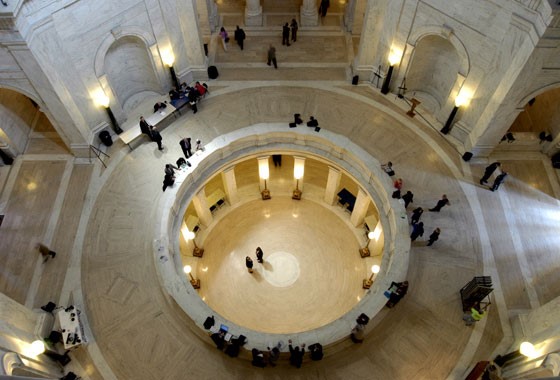
The Well is where conversations happen at the Capitol — where legislators, lobbyists, and staff compare notes, test the mood, and figure out what matters. This briefing is built the same way: a fast, disciplined read on what is moving in West Virginia government before the day begins.
FROM THE WELL | MORNING BRIEF
West Virginia’s early-morning briefing for people who need to know what matters in government before the day begins.
Tuesday, September 1, 2026
Rotunda Roundup
West Virginia’s data-center debate gained something it has largely lacked: hard estimates of where the tax money would actually go. Treasurer Larry Pack projects two announced projects alone could generate more than $100 million annually for counties, schools, the state’s income-tax reduction fund and other counties — numbers certain to sharpen the legislative argument over whether the state negotiated the right bargain. At the same time, state revenues remain comfortably above forecast, Attorney General JB McCuskey secured a major federal-court victory against New York’s climate-superfund law, and the Public Service Commission moved into the evidentiary phase of a consequential Bluefield sewer acquisition. (Le De News)
What Matters Today
West Virginia orders flat FY28 agency budgets despite revenue collections running ahead of estimates
West Virginia agencies have been directed to hold their fiscal 2028 General Revenue budget requests at or below current-year funding levels even as state tax collections continue to outperform projections. Through the first two months of fiscal 2027, the state collected about $838.3 million, roughly $46.1 million — or 5.8% — above estimates and 6.8% above collections at the same point last year. Gov. Patrick Morrisey said the results demonstrate the state can continue providing tax relief while maintaining fiscal discipline.
The state’s fiscal 2026 budget year ended June 30 with approximately $5.7 billion in revenue, $370.6 million above estimates. About $245.4 million of that surplus already has been designated for spending through provisions in the fiscal 2027 budget, leaving approximately $147.9 million in unappropriated surplus revenue.
Despite those results, Revenue Secretary Eric Nelson has instructed cabinet secretaries and agency heads that fiscal 2028 General Revenue requests should remain at or below approved fiscal 2027 levels, excluding one-time appropriations. Agencies also have been directed to review existing programs for efficiencies, potential reductions or elimination, with increases expected to be considered only for emergency or critical needs. State budget instructions formally limit current-level fiscal 2028 General Revenue funding to no more than 100% of fiscal 2027 funding, minus one-time and surplus appropriations.
The stronger collections also will not automatically trigger another personal income tax reduction for fiscal 2028. Nelson told lawmakers in August that the state failed to meet the statutory benchmark used to activate another reduction. West Virginia has cut personal income tax rates by more than 30% through a series of legislative and automatic reductions since 2023, including the additional 5% reduction approved this year at Morrisey’s request.
Why it Matters: The administration is signaling that stronger-than-expected revenues will not automatically translate into larger agency budgets. Holding agencies flat while costs continue to rise sets up an important fiscal debate heading into the 2027 legislative session, particularly for programs facing increased costs in health care, education, public employee benefits and other core government services. It also reinforces Morrisey’s broader effort to restrain recurring spending while preserving room for future tax reductions.
What to Watch: Agency budget hearings scheduled for September and October will provide the first indication of where departments believe flat funding creates operational pressure — and which agencies seek exceptions for critical needs. The bigger question for lawmakers will be how Morrisey balances continued tax-cut ambitions, agency funding requirements and the roughly $148 million in currently unappropriated fiscal 2026 surplus when he presents his fiscal 2028 budget in January.
Source: WV News
Pack’s new analysis puts more than $100 million a year behind the debate over West Virginia’s two marquee data-center projects.
State Treasurer Larry Pack released a tax-impact analysis of the proposed $10 billion Penzance Management project in Berkeley County and Google’s estimated $7 billion project in Putnam County. The analysis projects about $10.5 million annually for the Berkeley County Commission and $28.3 million for its school district; Putnam County would receive about $8.3 million and its schools $17.4 million. More than $27.9 million would flow to the Personal Income Tax Reduction Fund, while other counties would divide another $5.6 million. The estimates assume the projects are completed. (Le De News)
Why it Matters: The report converts the data-center incentive debate from broad promises into specific fiscal stakes for local governments, schools and statewide tax policy.
What to Watch: Expect lawmakers and local opponents to scrutinize not just the projected revenue, but the underlying tax preferences. Del. Shawn Fluharty already is arguing that lawmakers should reconsider the structure and potentially examine taxation of data processing itself. (WV MetroNews)
Source: WV MetroNews
West Virginia’s August revenue collections beat estimates by roughly $34 million, keeping the state $46 million ahead two months into the fiscal year.
Personal income tax collections totaled about $169 million in August, roughly $15 million above estimate, and are running $26 million above forecast for the fiscal year. State officials cautioned that the pace should moderate as the full effect of the additional 5% personal income tax reduction backed by Gov. Patrick Morrisey works through collections. (West Virginia Public Broadcasting)
Why it Matters: The early cushion strengthens the state’s fiscal position heading toward the 2027 budget cycle, but policymakers will need to distinguish sustainable revenue growth from collections that will decline as tax cuts are fully implemented.
What to Watch: Personal income tax performance through the fall, continued weakness in corporate net income tax collections and whether the administration begins converting the early surplus into additional tax-cut or spending proposals.
Source: West Virginia Public Broadcasting
A federal judge has invalidated New York’s $75 billion climate-superfund law in a case led by West Virginia Attorney General JB McCuskey.
Chief U.S. District Judge Brenda Sannes ruled that New York could not impose retroactive liability on fossil-fuel companies for global greenhouse-gas emissions, finding the law preempted by the federal Clean Air Act and federal authority over foreign affairs. West Virginia led a 22-state coalition challenging the statute, which targeted fossil-fuel activity dating from 2000 through 2024. (WV News)
Why it Matters: The ruling is a significant legal victory for McCuskey and for coal, natural gas and petroleum interests that faced potential liability under an emerging state-level climate-superfund model.
What to Watch: Any appeal by New York and the effect of the ruling on West Virginia’s challenge to Vermont’s similar climate-superfund law.
Source: WV News
NextEra seeks to push PSC decision on controversial MARL transmission project to May 2027
NextEra Energy Transmission MidAtlantic is asking the West Virginia Public Service Commission for an additional 77 days to decide the fate of its proposed MidAtlantic Resiliency Link, potentially moving the commission’s statutory decision deadline from March 6 to May 22, 2027. The request was filed Aug. 31 and is tied to a separate proposal to revise the procedural schedule in the pending PSC case.
The proposed MARL project consists of approximately 107.5 miles of 500-kilovolt transmission line crossing Monongalia, Preston, Mineral and Hampshire counties and connecting transmission infrastructure in Pennsylvania, Maryland and Virginia. All four affected West Virginia county commissions have passed resolutions opposing the project, and several have intervened formally in the PSC proceeding.
Opponents argue West Virginia would shoulder property, agricultural and environmental impacts while much of the project’s benefit would accrue elsewhere, including serving growing electricity demand associated with Northern Virginia data centers. NextEra and PJM contend the line is needed to relieve transmission congestion and maintain regional reliability as power plants retire. NextEra estimates the project would add less than $1 per month to an average West Virginia residential customer’s bill and create about 200 construction jobs.
Why it Matters: MARL has become one of West Virginia’s most significant transmission proceedings, connecting debates over property rights, electricity costs and local impacts with the enormous regional power requirements of the data-center industry.
What to Watch: Whether the PSC approves the revised schedule and 77-day extension, which could also alter evidentiary hearings previously scheduled to begin Oct. 26.
Source: WV News
The PSC has moved the proposed $34 million-plus sale of Bluefield’s sewer system into its evidentiary phase.
The Public Service Commission opened testimony Tuesday on West Virginia American Water’s proposed acquisition after holding the public-comment hearing highlighted in Monday’s briefing. The system is not legally classified as distressed or failing, but company officials cited aging infrastructure. Existing Bluefield rates established by a 2024 ordinance would remain through 2028 before customers transition to West Virginia American Water’s standard rates; the proposal also contemplates the West Virginia PSC setting rates for customers on the Virginia side of the jointly operated system. (WV MetroNews)
Why it Matters: The case combines utility consolidation, infrastructure investment and future rate exposure in a transaction that crosses the West Virginia-Virginia line.
What to Watch: The evidentiary record on system condition, acquisition value and future rates — and ultimately whether commissioners approve, modify or reject the transaction.
Source: WV MetroNews
Morgantown weighs restrictions on Flock cameras and broader surveillance technology
Morgantown City Council members are developing a policy that could restrict the use of automated license plate readers, facial recognition, biometric identification and other surveillance technology on property controlled by the city. The discussion comes as Monongalia County continues operating Flock Safety cameras throughout the county, including within Morgantown.
Council members Jodi Hollingshead and Mark Downs said the city generally cannot prohibit county-owned cameras simply because they are located within city limits, but it can establish rules governing technology placed on city property. Four of the seven council members are working on a broader surveillance policy rather than legislation directed solely at Flock. Downs has proposed prohibiting technologies that use facial or biometric identification, predictive policing, live video streaming, aggregated data or systems designed to profile individuals’ movements or associations.
The debate also continues to focus on Monongalia County’s decision to purchase its Flock system with opioid settlement money. Hollingshead and Downs both questioned whether settlement funds intended to address the opioid epidemic should finance surveillance technology, while acknowledging legitimate law enforcement uses for certain technologies.
Why it Matters: The Morgantown debate broadens West Virginia’s emerging policy fight over automated license plate readers from questions about law enforcement effectiveness to privacy, data ownership, third-party access and the permissible use of opioid settlement dollars.
What to Watch: Whether council advances a formal ordinance or policy, how broadly it defines prohibited surveillance technologies and whether the debate produces pressure for statewide standards governing ALPRs and law enforcement data.
Source: WV News
Congress has pushed the next federal shutdown deadline beyond the midterm elections, sending a short-term funding bill to President Donald Trump.
The U.S. House voted 370-48 Tuesday to extend current federal funding through Dec. 11. The Senate passed the measure Aug. 8, meaning presidential action is the final step before the immediate Sept. 30 shutdown threat is removed. (Investing.com)
Why it Matters: For West Virginia, the measure would preserve near-term continuity across federal agencies, grants, law enforcement, energy programs and other federally supported operations while Congress defers the larger FY 2027 appropriations fight.
What to Watch: Trump’s signature and the full-year spending negotiations that now move toward a potentially difficult post-election December deadline.
Source: Reuters
Four Putnam County lawmakers are pressing the Division of Highways for an expedited safety review of U.S. Route 35 after another fatal crash.
Delegates Sarah Drennan, Kathie Hess Crouse, Jim Butler and Jarred Cannon asked DOH to conduct a comprehensive engineering and safety review of six intersections along the increasingly busy corridor. Their letter follows multiple crashes, including the recent death of a 61-year-old woman at the Plantation Road intersection, and raises concerns about vehicle speeds, tractor-trailer traffic and limited visibility. (WV MetroNews)
Why it Matters: Legislative pressure is now building for a formal agency response that could produce new safety projects, design changes or capital priorities along an important commercial corridor.
What to Watch: DOH’s response, whether it agrees to the expedited study and what engineering recommendations emerge for the six intersections.
Source: WV MetroNews
An $11.8 million federally funded restoration of the Rend Trail is underway in New River Gorge National Park and Preserve.
Officials broke ground on the project Tuesday using Great American Outdoors Act funding. The work includes restoration of deteriorating historic railroad trestles and other improvements along the trail; the National Park Service says the trail is currently closed from both ends during construction, with work expected to continue into 2027. (WV MetroNews)
Why it Matters: The project represents another substantial federal investment in the infrastructure supporting West Virginia’s growing national-park and outdoor-tourism economy.
What to Watch: Construction milestones, the effect of the lengthy closure on surrounding recreation traffic and whether additional federal park investments follow.
Source: WV MetroNews
A Ritchie County man has pleaded guilty in federal court to soliciting attacks on federal law-enforcement officers.
Christopher Bentley, 34, of Pennsboro pleaded guilty Tuesday to solicitation to commit a crime of violence after federal prosecutors said he used Facebook to encourage attacks on Immigration and Customs Enforcement agents. Prosecutors said some posts discussed body armor, firearms and areas of the body not protected by ballistic vests. He faces a statutory maximum of 20 years in federal prison. (Department of Justice)
Why it Matters: The case is a significant West Virginia federal prosecution involving threats against federal officers and online solicitation of violence.
What to Watch: Sentencing and any additional information developed through the federal court record.
Source: U.S. Attorney’s Office, Northern District of West Virginia
Public Morrisey-Justice clash stirs unusually early speculation about 2028 governor’s race
A recent public dispute between Gov. Patrick Morrisey and U.S. Sen. Jim Justice over The Greenbrier has fueled early political speculation about whether Justice could seek a return to the Governor’s Office in 2028. The disagreement began after Morrisey commented on The Greenbrier’s new ownership and expressed hope that it would bring financial stability to the resort. Justice defended his family’s stewardship of the property, prompting Morrisey to criticize its financial management.
Marshall University political scientist Marybeth Beller told WV News that speculation about another Justice gubernatorial campaign has circulated for more than a year, but cautioned that it remains far too early to draw conclusions about the 2028 race. Justice’s Senate term runs through 2030. Beller noted that Justice left the Governor’s Office with relatively strong public support, while ongoing legal and financial issues could influence voters if he sought another statewide office.
Del. Mike Pushkin, D-Kanawha, chairman of the West Virginia Democratic Party, criticized both Republicans and said Democrats remain focused on the 2026 midterm elections rather than identifying a 2028 gubernatorial candidate. He used the dispute to call attention to education funding, water infrastructure and health care issues.
Why it Matters: There is no announced 2028 Justice candidacy, but the unusually public dispute exposes a developing political fault line between West Virginia’s current and former governors — two of the state Republican Party’s most recognizable figures.
What to Watch: Whether the Morrisey-Justice disagreement continues beyond The Greenbrier dispute, whether Justice takes steps suggesting interest in another gubernatorial campaign and how the relationship between the two affects Republican politics heading first into the 2026 midterms and eventually the 2028 cycle.
Source: WV News
What to Watch
The state’s business and political leadership moves to The Greenbrier Wednesday: The West Virginia Chamber of Commerce’s Annual Meeting and Business Summit opens Sept. 2, putting Gov. Patrick Morrisey, members of the congressional delegation, state officials, lawmakers and major employers into the same policy conversation as data centers, energy, workforce, health care and economic development continue moving toward the 2027 legislative session. (WV Chamber of Commerce)
Data-center tax policy now has numbers lawmakers can argue over: Pack’s report is likely to become a benchmark in the debate over HB 2014, local revenue shares, school funding, the Personal Income Tax Reduction Fund and whether the state’s existing high-technology property valuation rules should be revisited. (Le De News)
PSC energy cases are moving onto the September calendar: An evidentiary hearing is scheduled Sept. 9 on Appalachian Power and Wheeling Power’s proposal for a replacement mechanical-draft cooling tower at the Mitchell Power Plant, followed Sept. 10 by the Hope Gas “Red Lines” abandonment case. (West Virginia Public Service Commission)
The Legislature returns for interims later this month: Sept. 13-15 meetings will provide the next broad opportunity to see which summer policy fights — including data centers, infrastructure, human services, energy and agency oversight — are beginning to harden into 2027 legislation.
New York’s next move matters beyond New York: An appeal of the climate-superfund ruling would keep alive a legal fight with direct implications for West Virginia’s energy sector and for similar laws elsewhere, including Vermont’s. (Department of Justice)
Dates Ahead
Sept. 2-4: West Virginia Chamber of Commerce Annual Meeting and Business Summit at The Greenbrier. (WV Chamber of Commerce)
Sept. 9: PSC evidentiary hearing, Case 26-0130-E-CN, Appalachian Power/Wheeling Power proposed Mitchell Power Plant mechanical-draft cooling tower, 9:30 a.m. (West Virginia Public Service Commission)
Sept. 10: PSC evidentiary hearing, Case 26-0448-G-PC, Hope Gas Category 1 “Red Lines” proceeding, 9:30 a.m. (West Virginia Public Service Commission)
Sept. 11: Public-comment deadline for proposed West Virginia Military Hall of Fame rules.
Sept. 13-15: West Virginia Legislature interim committee meetings at the state Capitol.
Sept. 26: Scheduled expiration of the federal hot-food SNAP waiver for Lewis, Pleasants, Ritchie and Upshur counties unless extended.
Dec. 11: Proposed expiration of the federal continuing resolution now awaiting presidential action. (Investing.com) |